
Pool Wiring for Above Ground Pools: 7 Mistakes You’re Making & How to Fix Them
Look, we get it. You bought an above-ground pool to cool off during those brutal Saratoga Springs summers, not to become an electrical expert. But here’s the thing, pool wiring isn’t just another DIY project you can YouTube your way through on a Saturday afternoon.
Between 2002 and 2018, 66 people were injured by electric pool shock drowning. Half of them didn’t make it. That’s not a statistic we throw around to scare you, it’s why we’re writing this post.
As a pool wiring electrician serving Queensbury, Glens Falls, and the greater Saratoga area, we’ve seen these mistakes more times than we can count. The good news? They’re all preventable. Let’s dive in.
Mistake #1: Skipping (or Screwing Up) GFCI Protection
What You’re Doing Wrong: You plugged your pool pump into a regular outdoor outlet, or worse, you’re using an extension cord from inside your house. Maybe you have a GFCI outlet, but you’ve never actually tested it.
Why It’s Dangerous: GFCI outlets detect power imbalances and cut electricity in milliseconds. Without them, you’re one frayed wire away from turning your backyard oasis into a serious hazard.
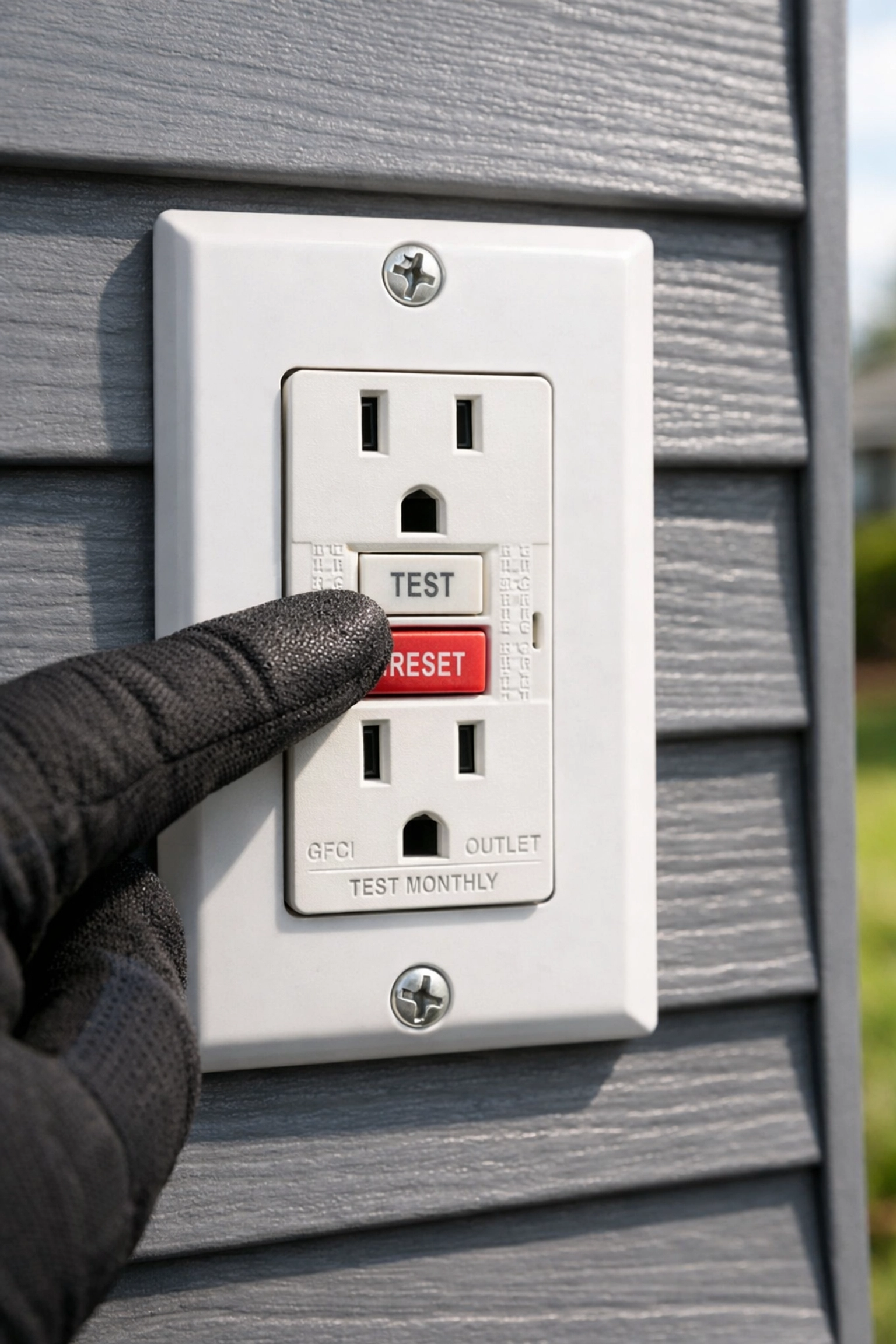
The Fix: Every single electrical component near your pool needs GFCI protection, yes, even the 240-volt pump. And here’s the kicker: you need to test those GFCI outlets monthly. Press that little “test” button. If it doesn’t trip, it’s not protecting you.
Why It Matters: GFCIs are the difference between a minor electrical fault and a tragedy. They’re required by the National Electrical Code for a reason.
Mistake #2: Treating Grounding and Bonding Like Optional Features
What You’re Doing Wrong: You connected the pump and called it a day. No bonding wire connecting metal pool components. No equipotential plane. Just the pump, plugged in and running.
Why It’s Dangerous: When metal parts aren’t properly bonded, voltage differences can develop. That means when someone touches the pool ladder and the wet ground at the same time, they become the path for electricity to equalize. That’s bad. Really bad.
The Fix: Proper bonding requires an #8 AWG solid copper wire connecting:
- The pool pump motor
- All metal components (ladder, rails, light fixtures)
- The ground ring around the pool
- Any metal within 5 feet of the pool
Everything needs to be at the same electrical potential, which eliminates shock hazards.
Why It Matters: This is exactly the kind of work where hiring an electrician for above ground pool installation isn’t just smart, it’s essential. Bonding requirements are complex and specific, and mistakes here can be fatal.
Mistake #3: Burying Cables Like You’re Planting Tulips
What You’re Doing Wrong: You dug a shallow trench, tossed the cable in, and covered it with dirt. Maybe you buried it two feet from the pool wall because that’s where it was convenient.
Why It’s Dangerous: Shallow burial means a shovel or landscaping project can slice through live wiring. Cables too close to the pool create hazards if damaged or if moisture gets in.
The Fix: The National Electrical Code is crystal clear:
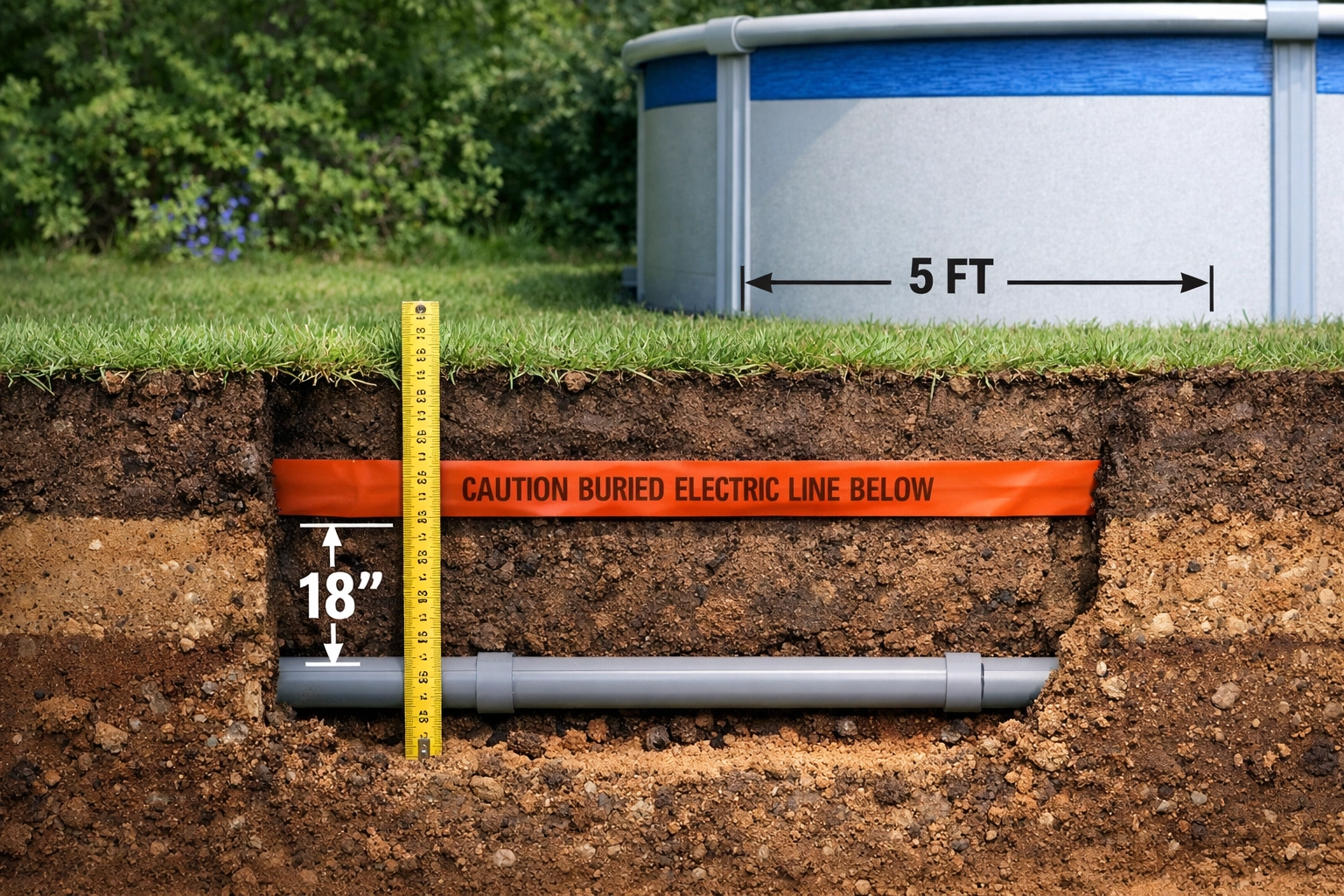
- Underground wiring must be at least 5 feet horizontally from the inside pool wall
- If you can’t maintain that distance, the wiring must be in rigid metal conduit, intermediate metal conduit, or approved nonmetallic raceway
- Burial depth depends on the wiring method, consult NEC Table 680.10 for specifics
For most residential pool wiring installations in the Glens Falls and Saratoga Springs area, we’re running PVC conduit at 18 inches deep (minimum) with proper warning tape above it.
Why It Matters: Proper burial depth protects your wiring from damage and ensures it lasts for years without creating hazards.
Mistake #4: Sharing Circuits Like It’s a Potluck Dinner
What You’re Doing Wrong: Your pool pump is on the same circuit as your outdoor lighting, garage door opener, and maybe that beer fridge in the shed. What could go wrong?
Why It’s Dangerous: Pool pumps are power-hungry. When they kick on, they can overload shared circuits, trip breakers, and cause voltage drops that damage other equipment. At best, you’re constantly resetting breakers. At worst, you’re creating fire hazards from overheated wiring.
The Fix: Your pool pump needs its own dedicated circuit. Period. This means:
- A dedicated breaker in your electrical panel
- Wire sized appropriately for the pump’s amperage requirements
- No other devices on that circuit
If your panel doesn’t have space for another breaker, you might need a panel upgrade, which sounds expensive, but is way cheaper than replacing your home after an electrical fire.
Why It Matters: Dedicated circuits ensure your pump gets consistent, safe power without compromising other systems or creating hazards.
Mistake #5: Going Full DIY With Temporary “Solutions”
What You’re Doing Wrong: You ran an extension cord through the grass to the pool pump. Or you’ve got wiring lying on the ground “just for this season.” You’re planning to do it properly next year. (Sure you are.)
Why It’s Dangerous: Extension cords aren’t rated for continuous outdoor use with high-power equipment. They create tripping hazards, moisture intrusion points, and overheating risks. That orange cord you bought at the hardware store? It’s not designed to handle a pool pump running 8-12 hours a day.
The Fix: Stop using temporary solutions for permanent pool wiring installations. If you need power at the pool, it needs to be properly wired with:
- Permanent wiring in conduit
- Weatherproof connections
- Proper burial or overhead installation per code
- Appropriate wire gauge for the load
Why It Matters: There’s a reason electricians cringe when they see extension cords running pool equipment. It’s not about being picky, it’s about physics, safety, and the fact that your homeowner’s insurance won’t cover damage from unapproved wiring methods.
This is where calling a local pool electrician in Saratoga Springs makes sense. Our swimming pool wiring services ensure everything is done right the first time.
Mistake #6: Working on Live Circuits (Because You’re Brave, or Something)
What You’re Doing Wrong: The pump is making a weird noise, so you pop off the cover to take a look. With the power still on. Because it’ll only take a second, right?
Why It’s Dangerous: Water and electricity don’t mix. When you’re working around a pool, everything is damp, including you. Working on live circuits dramatically increases your electrocution risk.
The Fix: Always, always, ALWAYS:
- Turn off the breaker at the electrical panel
- Use a non-contact voltage tester to verify power is off
- Lock out/tag out the breaker so no one turns it back on while you’re working
- Keep your voltage tester in your pool maintenance kit
Even for “quick” jobs, follow this procedure every single time.
Why It Matters: This is literally life and death. The few seconds it takes to shut off power and verify it’s off could save your life.
Mistake #7: Ignoring Corrosion Until Something Stops Working
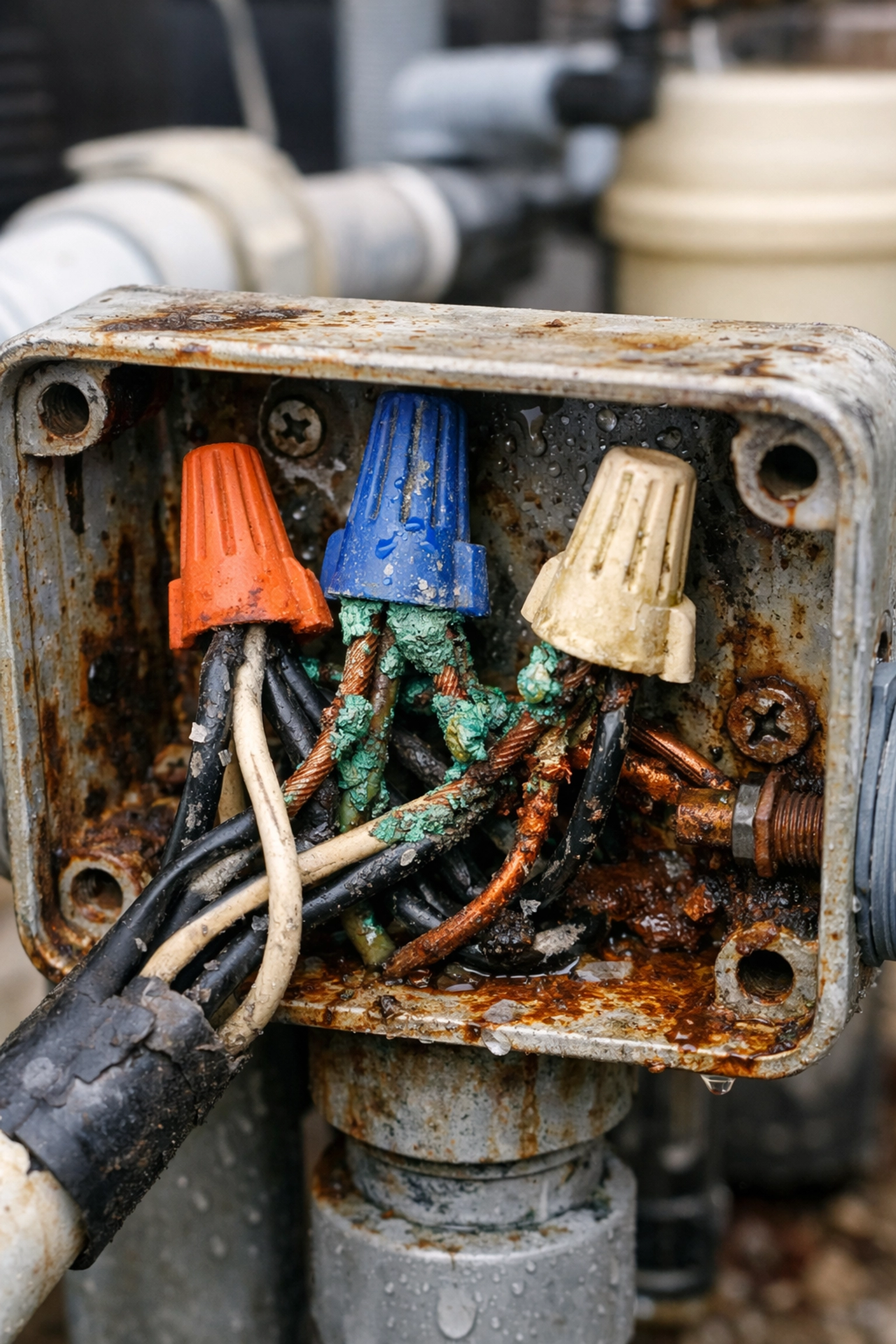
What You’re Doing Wrong: You’ve seen that green crusty stuff building up on connections, but hey, it still works. Those wire nuts are looking a bit sketchy, and the pump housing has some rust, but if it ain’t broke, don’t fix it, right?
Why It’s Dangerous: Corrosion creates resistance, which creates heat, which creates fire hazards. It also compromises electrical connections, leading to arcing, component failure, and shock hazards. Pool environments are brutal on electrical components: the moisture, chlorine, and temperature swings accelerate deterioration.
The Fix: Regular inspections should include:
- All electrical connections checked for corrosion
- Wire insulation inspected for cracks or damage
- Light fixtures checked for water intrusion
- Junction boxes verified as weatherproof and properly sealed
- Ground connections cleaned and tightened
Replace corroded components immediately. Don’t wait for failure.
Why It Matters: Preventive maintenance on pool electrical systems isn’t optional. It’s the difference between a system that lasts 15+ years and one that fails catastrophically after three summers.
The Bottom Line: Pool Wiring Isn’t a Weekend Project
Above-ground pools might seem simpler than in-ground pool wiring installations, but the electrical requirements are just as serious. The National Electrical Code doesn’t have a “casual homeowner exemption.”
In the Queensbury, Saratoga Springs, and Glens Falls areas, we see the aftermath of DIY pool wiring regularly. Sometimes it’s just inconvenient (constant breaker trips, blown motors). Sometimes it’s dangerous (compromised GFCI protection, improper bonding). And sometimes, we’re called to fix someone else’s mistakes before someone gets hurt.
Expert Pool Wiring Services in Queensbury, Glens Falls & Saratoga
Your pool should be the safest, most relaxing spot in your yard. Let’s make sure the electrical system keeping it running is just as solid as the fun you’ll have in it.
If you’re planning to install an above-ground pool this season, or if you’ve already got one with questionable wiring, contact the professional electricians at Signals Electic. Our team is available 24/7 for emergency service, and we offer free estimates on pool wiring services in Queensbury, Glens Falls, Saratoga and throughout the southern Adirondacks.